

TOP STORY
Marketplace Briefing: Why Amazon is selling its AI-powered shopping tools to other retailers
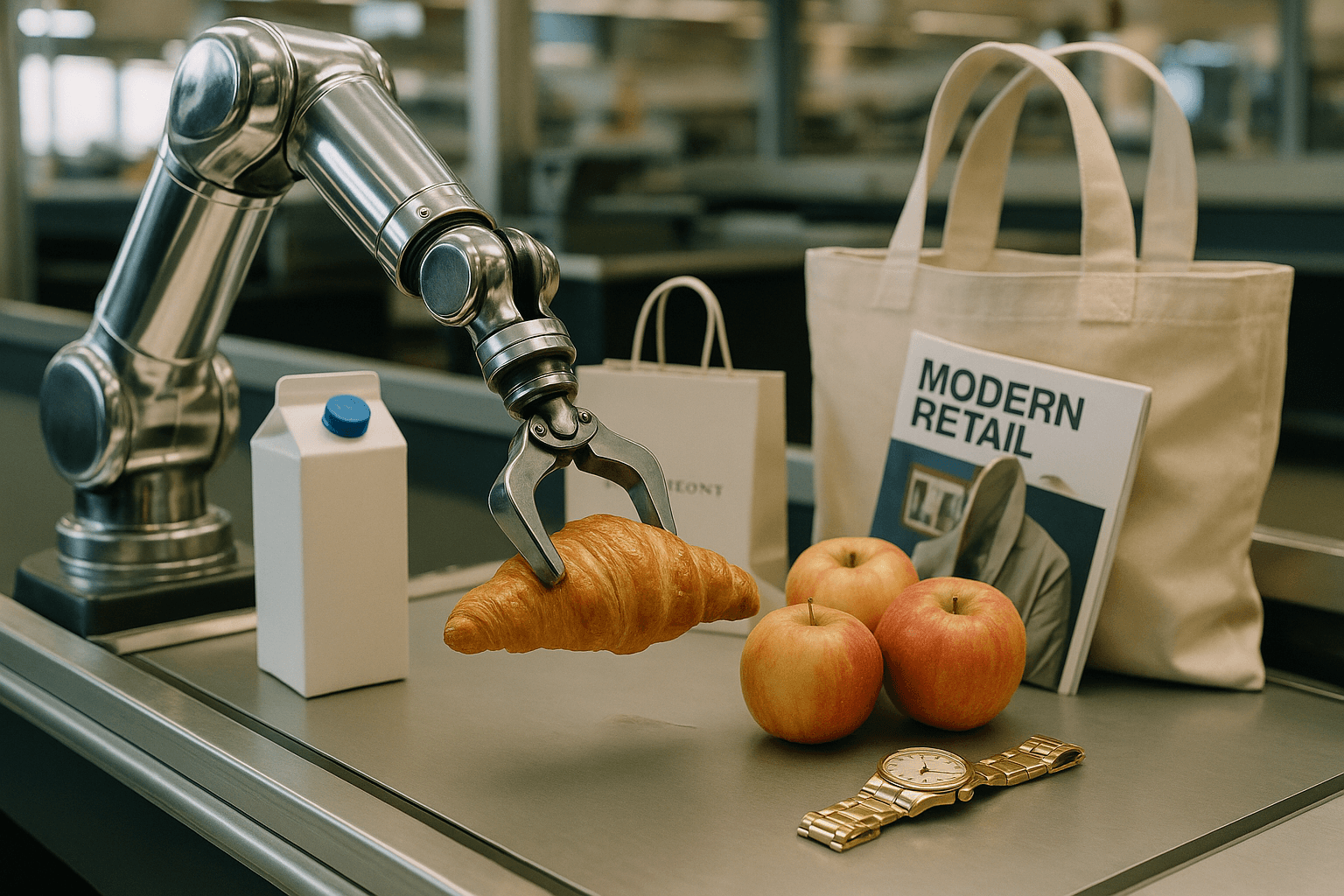
Amazon is selling its AI shopping assistant technology to other retailers to expand in the growing market for AI-powered shopping tools.
Weekly intelligence across AI, ecommerce, luxury, and jewellery.
Issue W22 · May 2026
articles analysed this week
Despite AI’s promise to streamline operations, retailers scrambling to sell their own AI tools ironically reveal dependence on tech rivals they aim to outpace.
Luxury’s real edge is not in owning AI, but in mastering its orchestration. Amazon is now selling its AI shopping assistant to rivals, even as it races to out-AI them, while Anthropic’s near trillion-dollar valuation signals a new pecking order where the tools matter more than who built them. Richemont’s strong jewellery sales and Watches of Switzerland’s US surge show that brands who control the narrative and experience, not just the tech stack, are the ones winning share.
Everyone wants to be the AI supplier, but the scramble exposes how even giants like Amazon depend on outside innovation, Asana buying StackAI, Salesforce relying on Anthropic, and Stord raising $250 million to keep up. The counterargument is that building in-house AI gives lasting advantage, but the evidence says otherwise: the fastest movers are those who integrate, not invent, and who keep their brand front and center while the tech arms race plays out behind the curtain.
For luxury and jewellery, the lesson is clear: invest in partnerships that let you deploy best-in-class AI without losing control of your customer experience. In the next quarter, focus less on proprietary tech and more on curating the right mix of external tools to amplify what makes your brand irreplaceable.
Weekly Luxury Intelligence · ~12 minutes
Subscribe in your podcast app: RSS feed
Digital commerce, retail innovation, DTC trends
Market moves, brand strategy, trade insights
AI news, strategy, and business transformation
Luxury brands, consumer trends, fashion
Despite AI’s promise to streamline operations, retailers scrambling to sell their own AI tools ironically reveal dependence on tech rivals they aim to outpace.
Rate this issue
This Week
Amazon is selling its AI shopping assistant technology to other retailers to expand in the growing market for AI-powered shopping tools.
Stord raised $250 million at a $3 billion valuation to expand its e-commerce warehouse and inventory management network for brands competing with Amazon.
Walmart is attracting more emerging and premium brands, offering online-born and higher-priced labels expanded opportunities to scale across the U.S.
The European Commission fined Temu €200m for breaching the Digital Services Act by failing to assess illegal product risks for EU consumers.
Most retail fulfillment tech projects falter when teams accept a vendor’s 14-week implementation timeline without challenging its assumptions in early planning meetings.
Automated email flows deliver $513 per 1,000 emails—eight times more revenue than campaigns—despite accounting for just 6% of sends at North American e-commerce brands.
Shoezone has launched its first social shopping channel on TikTok Shop to expand its social commerce presence.
This Week
Richemont reported strong jewellery sales growth last year, offsetting weaker watch revenues and dismissing speculation about selling any of its brands.
Swatch's global launch of its Audemars Piguet collaboration sparked large crowds, clashes, and police intervention at retail stores worldwide.
Watches of Switzerland’s annual revenue rose as US sales surged to account for over half of the company’s total.
A jewellery photographer blending high fashion and documentary styles claims a unique approach sets their work apart in the competitive luxury market.
Brinder Dhatt, known as TheJewelGeek, is launching The Jewel Geek Education seminars in schools across England to promote jewellery industry careers.
Natural Diamond Council CEO Amber Pepper signaled a luxury-focused strategy at COUTURE, citing increased consumer desire for natural diamonds amid synthetic alternatives.
Houlden has added two independent luxury jewellers, including heritage retailer Martin & Co, to its membership in its 50th anniversary year.
This Week
Groq is seeking $650 million in internal funding as it shifts focus from hardware to AI inference.
A new workflow enables end-to-end design, verification, compression, and deployment of AI-based virtual sensor models to embedded processors within Simulink.
Salesforce claims migrating its dev org to Anthropic's Claude Code cut project time from 231 to 13 days and boosted pull requests 79% per developer.
Asana acquires no-code agent-builder StackAI to expand its suite of AI workflow tools.
Cognition CEO Scott Wu says Devin, its leading AI coding agent, is not intended to replace human programmers.
South Africa holds 88% of global platinum-group metal reserves vital to AI supply chains, but its draft AI policy fails to leverage this advantage.
Anthropic became Silicon Valley’s most valuable AI company after a $65 billion funding round pushed its valuation near $1 trillion.
This Week
Rising smartphone prices in India may cut annual sales by up to 30%, with entry-level models seeing the steepest increases.
Gap and American Eagle issued weak annual forecasts as consumers cut discretionary spending in response to a challenging macroeconomic environment.
Luxury brands are defending their position as mass and premium competitors move upmarket by emphasising specificity, scarcity and culture-creating.
Lisa Eldridge has opened a months-long pop-up store in SoHo as the U.K. cosmetics brand expands its U.S. presence.
Capri is hiring new executives to drive growth at Michael Kors and Jimmy Choo following the sale of Versace.
Peyton Manning’s partnership is drawing younger shoppers to Johnston & Murphy, boosting the 175-year-old brand’s appeal, Genesco reported in its Q1 earnings call.
Luxury brands reduced marketing campaigns for China’s “520” Valentine’s Day, shifting focus amid changing consumer sentiment in the key market.